Finance
Great Thinkers
“A provocative read...There are few tomes that coherently map such broad economic histories as well as Mr. Dalio’s. Perhaps more unusually, Mr. Dalio has managed to identify metrics from that history that can be applied to understand today.” —Andrew Ross Sorkin, The New York Times
From legendary investor Ray Dalio, author of the #1 New York Times bestseller Principles, who has spent half a century studying global economies and markets, Principles for Dealing with the Changing World Order examines history’s most turbulent economic and political periods to reveal why the times ahead will likely be radically different from those we’ve experienced in our lifetimes—and to offer practical advice on how to navigate them well.
A few years ago, Ray Dalio noticed a confluence of political and economic conditions he hadn’t encountered before. They included huge debts and zero or near-zero interest rates that led to massive printing of money in the world’s three major reserve currencies; big political and social conflicts within countries, especially the US, due to the largest wealth, political, and values disparities in more than 100 years; and the rising of a world power (China) to challenge the existing world power (US) and the existing world order. The last time that this confluence occurred was between 1930 and 1945. This realization sent Dalio on a search for the repeating patterns and cause/effect relationships underlying all major changes in wealth and power over the last 500 years.
In this remarkable and timely addition to his Principles series, Dalio brings readers along for his study of the major empires—including the Dutch, the British, and the American—putting into perspective the “Big Cycle” that has driven the successes and failures of all the world’s major countries throughout history. He reveals the timeless and universal forces behind these shifts and uses them to look into the future, offering practical principles for positioning oneself for what’s ahead.
"This is that rarity, a useful book."--Warren Buffett
Howard Marks, the chairman and cofounder of Oaktree Capital Management, is renowned for his insightful assessments of market opportunity and risk. After four decades spent ascending to the top of the investment management profession, he is today sought out by the world's leading value investors, and his client memos brim with insightful commentary and a time-tested, fundamental philosophy. Now for the first time, all readers can benefit from Marks's wisdom, concentrated into a single volume that speaks to both the amateur and seasoned investor.
Informed by a lifetime of experience and study, The Most Important Thing explains the keys to successful investment and the pitfalls that can destroy capital or ruin a career. Utilizing passages from his memos to illustrate his ideas, Marks teaches by example, detailing the development of an investment philosophy that fully acknowledges the complexities of investing and the perils of the financial world. Brilliantly applying insight to today's volatile markets, Marks offers a volume that is part memoir, part creed, with a number of broad takeaways.
Marks expounds on such concepts as "second-level thinking," the price/value relationship, patient opportunism, and defensive investing. Frankly and honestly assessing his own decisions--and occasional missteps--he provides valuable lessons for critical thinking, risk assessment, and investment strategy. Encouraging investors to be "contrarian," Marks wisely judges market cycles and achieves returns through aggressive yet measured action. Which element is the most essential? Successful investing requires thoughtful attention to many separate aspects, and each of Marks's subjects proves to be the most important thing.

A NEW YORK TIMES, WALL STREET JOURNAL, AND USA TODAY BESTSELLER
Named one of the Best Business Books of 2018 by Business Insider
The legendary investor Howard Marks shows how to identify and master the cycles that govern the markets.
We all know markets rise and fall, but when should you pull out, and when should you stay in? The answer is never black or white, but is best reached through a keen understanding of the reasons behind the rhythm of cycles. Confidence about where we are in a market cycle comes when you learn the patterns of ups and downs that influence not just economics, markets and companies, but also human psychology and the investing behaviors that result.
If you study past cycles, understand their origins and remain alert for the next one, you will become keenly attuned to the investment environment as it changes. You'll be aware and prepared while others get blindsided by unexpected events or fall victim to emotions like fear and greed.
By following Marks's insights--drawn in part from his iconic memos over the years to Oaktree's clients--you can master these recurring patterns to have the opportunity to improve your results.
In Mastering the Market Cycle, Marks reveals his framework for superior investing, offering a practical guide to:
- Investor Psychology: Learn to identify the emotional pendulum swings between euphoria and fear that drive market extremes, and how to use them to your advantage.
- Cycle Positioning: Calibrate your portfolio by learning when to be aggressive and when to be defensive, based on a keen awareness of where we stand in the current economic cycle.
- The Credit Cycle: Understand why the credit cycle is the most powerful and volatile force, and what the "credit window" tells you about market health and risk management.
- Getting the Odds on Your Side: Move beyond simple forecasting to a more sophisticated understanding of tendencies and probabilities, giving you an edge while others are blindsided.
Biographies
SHORTLISTED FOR THE FT AND MCKINSEY BUSINESS BOOK OF THE YEAR AWARD 2019
NEW YORK TIMES AND SUNDAY TIMES BUSINESS BESTSELLER
'Reads more like a delicious page-turning novel...Put it on your holiday gift list for your favourite hedge-fund honcho' Bloomberg
'A compelling read' Economist
'Captivating' New York Times book review
Jim Simons is the greatest moneymaker in modern financial history. His record bests those of legendary investors, including Warren Buffett, George Soros and Ray Dalio. Yet Simons and his strategies are shrouded in mystery. The financial industry has long craved a look inside Simons's secretive hedge fund, Renaissance Technologies and veteran Wall Street Journal reporter Gregory Zuckerman delivers the goods.
After a legendary career as a mathematician and a stint breaking Soviet codes, Simons set out to conquer financial markets with a radical approach. Simons hired physicists, mathematicians and computer scientists - most of whom knew little about finance - to amass piles of data and build algorithms hunting for the deeply hidden patterns in global markets. Experts scoffed, but Simons and his colleagues became some of the richest in the world, their strategy of creating mathematical models and crunching data embraced by almost every industry today.
As Renaissance became a major player in the financial world, its executives began exerting influence on other areas. Simons became a major force in scientific research, education and Democratic politics, funding Hilary Clinton's presidential campaign. While senior executive Robert Mercer is more responsible than anyone else for the Trump presidency - he placed Steve Bannon in the campaign, funded Trump's victorious 2016 effort and backed alt-right publication Breitbart. Mercer also impacted the success of the Brexit campaign as he made significant investments in Cambridge Anatlytica. For all his prescience, Simons failed to anticipate how Mercer's activity would impact his firm and the world.
In this fast-paced narrative, Zuckerman examines how Simons launched a quantitative revolution on Wall Street, and reveals the impact that Simons, the quiet billionaire king of the quants, has had on worlds well beyond finance.
Merchant Bankers

In his rich and nuanced portrait of the remarkable, elusive Rothschild family, Oxford scholar and bestselling author Niall Ferguson uncovers the secrets behind the family's phenomenal economic success. He reveals for the first time the details of the family's vast political network, which gave it access to and influence over many of the greatest statesmen of the age. And he tells a family saga, tracing the importance of unity and the profound role of Judaism in the lives of a dynasty that rose from the confines of the Frankfurt ghetto and later used its influence to assist oppressed Jews throughout Europe. A definitive work of impeccable scholarship with a thoroughly engaging narrative, The House of Rothschild is a biography of the rarest kind, in which mysterious and fascinating historical figures finally spring to life.
They immigrated to America from Germany in the nineteenth century with names like Loeb, Sachs, Seligman, Lehman, Guggenheim, and Goldman. From tenements on the Lower East Side to Park Avenue mansions, this handful of Jewish families turned small businesses into imposing enterprises and amassed spectacular fortunes. But despite possessing breathtaking wealth that rivaled the Astors and Rockefellers, they were barred by the gentile establishment from the lofty realm of "the 400," a register of New York's most elite, because of their religion and humble backgrounds. In response, they created their own elite "100," a privileged society as opulent and exclusive as the one that had refused them entry.
"Our Crowd" is the fascinating story of this rarefied society. Based on letters, documents, diary entries, and intimate personal remembrances of family lore by members of these most illustrious clans, it is an engrossing portrait of upper-class Jewish life over two centuries; a riveting story of the bankers, brokers, financiers, philanthropists, and business tycoons who started with nothing and turned their family names into American institutions.

Commerce meets conquest in this swashbuckling story of the six merchant-adventurers who built the modern world
It was an era when monopoly trading companies were the unofficial agents of European expansion, controlling vast numbers of people and huge tracts of land, and taking on governmental and military functions. They managed their territories as business interests, treating their subjects as employees, customers, or competitors. The leaders of these trading enterprises exercised virtually unaccountable, dictatorial political power over millions of people.
The merchant kings of the Age of Heroic Commerce were a rogue's gallery of larger-than-life men who, for a couple hundred years, expanded their far-flung commercial enterprises over a sizable portion of the world. They include Jan Pieterszoon Coen, the violent and autocratic pioneer of the Dutch East India Company; Peter Stuyvesant, the one-legged governor of the Dutch West India Company, whose narrow-minded approach lost Manhattan to the British; Robert Clive, who rose from company clerk to become head of the British East India Company and one of the wealthiest men in Britain; Alexandr Baranov of the Russian American Company; Cecil Rhodes, founder of De Beers and Rhodesia; and George Simpson, the "Little Emperor" of the Hudson's Bay Company, who was chauffeured about his vast fur domain in a giant canoe, exhorting his voyageurs to paddle harder so he could set speed records.
Merchant Kings looks at the rise and fall of company rule in the centuries before colonialism, when nations belatedly assumed responsibility for their commercial enterprises. A blend of biography, corporate history, and colonial history, this book offers a panoramic, new perspective on the enormous cultural, political, and social legacies, good and bad, of this first period of unfettered globalization.
“This is a collection of casual articles about the seemingly forbidding subject of merchant banking and about some of the world’s most outstanding and venerable merchant bankers — Hambros, Barings, Warburg, in London; Mattioli in Milan; Abs in Frankfurt; Lehman Brothers in New York; and the Rothschilds in Paris and London... Joseph Wechsberg gives the history of each of these institutions, most of which remain family controlled, and he presents profiles of the men who are or have been their guiding lights, whose very character serves to distinguish each of these mysterious citadels from the other and from lesser breeds in the more understandable area of commercial banking. The most remarkable feature of this truly fascinating book is the amount of knowledge the author brings to bear upon his subject in a most unobtrusive way. The articles are rich in information and a pleasure to read.” — Kirkus
“Mr. Wechsberg... has selected the names of seven merchant banks and bankers and written the story of each with a sparkling lucidity that is reminiscent of New Yorker Profiles... Mr. Wechsberg’s sketches of men and institutions make good reading.” — Saturday Review
“New Yorker Correspondent Joseph Wechsberg[’s]... stories have a richness of color and some details of remarkable deals that have turned money into factories, jobs and useful products for everybody’s compound interest.” — Time Magazine
Buffett

“Even people who don’t care a whit about business will be intrigued. . . . A side of the Oracle of Omaha that has rarely been seen.”—Time (Five Best Nonfiction Books of the Year)
A BEST BOOK OF THE YEAR: The Washington Post; People; Financial Times; Businessweek; Janet Maslin, The New York Times; Publishers Weekly
Warren Buffett is one of the most respected men in the world. But the legendary Omaha investor has never written a memoir or offered a glimpse into his intensely private life. Here, at last, he gives unprecedented access to his work, opinions, struggles, triumphs, follies, and wisdom.
This complete biography of the man known everywhere as “the Oracle of Omaha” was written by highly respected former financial analyst and business writer Alice Schroeder with the cooperation of Buffett himself, who gave her thousands of hours of his own time as well as complete access to his wife, children, friends, and business associates—and his files. The result is the fullest exploration of his philosophy of life we will ever have. Here are the principles and ideas that made Buffett astoundingly wealthy, enriched the lives (and bank accounts) of those who adopted them, and created the most fascinating American success story of our time.

In the third edition of this international best seller, Lawrence Cunningham brings you the latest wisdom from Warren Buffett’s annual letters to Berkshire Hathaway shareholders. New material addresses:
- the financial crisis and its continuing implications for investors, managers and society;
- the housing bubble at the bottom of that crisis;
- the debt and derivatives excesses that fueled the crisis and how to deal with them;
- controlling risk and protecting reputation in corporate governance;
- Berkshire’s acquisition and operation of Burlington Northern Santa Fe;
- the role of oversight in heavily regulated industries;
- investment possibilities today; and
- weaknesses of popular option valuation models.
Some other material has been rearranged to deepen the themes and lessons that the collection has always produced:
- Buffett’s “owner-related business principles” are in the prologue as a separate subject and
- valuation and accounting topics are spread over four instead of two sections and reordered to sharpen their payoff.
Media coverage is available at the following links:
Interviews/Podcasts:
Motley Fool, click here.
Money, Riches and Wealth, click here.
Manual of Ideas, click here.
Corporate Counsel, click here.
Reviews:
William J. Taylor, ABA Banking Journal, click here.
Bob Morris, Blogging on Business, click here.
Pamela Holmes, Saturday Evening Post, click here.
Kevin M. LaCroix, D&O Diary, click here.
Blog Posts:
On Finance issues (Columbia University), click here.
On Berkshire post-Buffett (Manual of Ideas), click here.
On Publishing the book (Value Walk), click here.
On Governance issues (Harvard University blog), click here.
Featured Stories/Recommended Reading:
Motley Fool, click here.
Stock Market Blog, click here.
Motley Fool Interviews with LAC at Berkshire's 2013 Annual Meeting
Berkshire Businesses: Vastly Different, Same DNA, click here.
Is Berkshire's Fat Wallet an Enemy to Its Success?, click here.
Post-Buffett Berkshire: Same Question, Same Answer, click here.
How a Disciplined Value Approach Works Across the Decades, click here.
Through the Years: Constant Themes in Buffett's Letters, click here.
Buffett's Single Greatest Accomplishment, click here.
Where Buffett Is Finding Moats These Days, click here.
How Buffett Has Changed Through the Years, click here.
Speculating on Buffett's Next Acquisition, click here.
Buffett Says “Chief Risk Officers” Are a Terrible Mistake, click here.
Berkshire Without Buffett, click here.

In the fourteen years between his time in New York with value-investing guru Benjamin Graham and his start as chairman of Berkshire Hathaway, Warren Buffett managed Buffett Partnership Limited, his first professional investing partnership. Over the course of that time—a period in which he experienced an unprecedented record of success—Buffett wrote semiannual letters to his small but growing group of partners, sharing his thoughts, approaches, and reflections.
Compiled for the first time and with Buffett's permission, the letters spotlight his contrarian diversification strategy, his almost religious celebration of compounding interest, his preference for conservative rather than conventional decision making, and his goal and tactics for bettering market results by at least 10% annually. Demonstrating Buffett's intellectual rigor, they provide a framework to the craft of investing that had not existed before: Buffett built upon the quantitative contributions made by his famous teacher, Benjamin Graham, demonstrating how they could be applied and improved.
These letters offer us a rare look into Buffett's mind and accessible lessons in control and discipline—effective in bull and bear markets alike, and in all types of investing climates—that are the bedrock of his success. Warren Buffett's Ground Rules paints a portrait of the sage as a young investor during a time when he developed the long-term value-oriented strategy that helped him build the foundation of his wealth—rules for success investors need, today and every day.
"An extraordinarily useful book for anyone who is interested in investing." —Guy Spier, author of The Education of a Value Investor
"This book is much more than a compilation of excerpts from Buffett's letters, smartly organized by investment theme. Miller begins every chapter with an articulate and insightful synthesis, which helps the reader understand Buffett's key ground rules on each theme." —Robert Pozen, Senior Lecturer, MIT Sloan School of Management
"Just when you thought you knew everything about the investing guru, [this] book provides unique insights." — Worth Magazine
Classics

In this fully revised and updated edition, Swensen, author of the bestselling personal finance guide Unconventional Success, describes the investment process that underpins Yale's endowment. He provides lucid and penetrating insight into the world of institutional funds management, illuminating topics ranging from asset-allocation structures to active fund management. Swensen employs an array of vivid real-world examples, many drawn from his own formidable experience, to address critical concepts such as handling risk, selecting advisors, and weathering market pitfalls.
Swensen offers clear and incisive advice, especially when describing a counterintuitive path. Conventional investing too often leads to buying high and selling low. Trust is more important than flash-in-the-pan success. Expertise, fortitude, and the long view produce positive results where gimmicks and trend following do not.
The original Pioneering Portfolio Management outlined a commonsense template for structuring a well-diversified equity-oriented portfolio. This new edition provides fund managers and students of the market an up-to-date guide for actively managed investment portfolios.
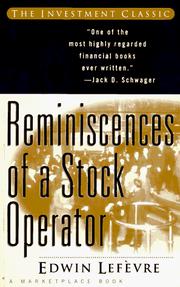
The Greatest Trading Book of All Time - Read by Generations of Wall Street's Best
Reminiscences of a Stock Operator by Edwin Lefevre is a classic exploration of the highs and lows of financial markets, offering timeless insights into the psychology of trading and investing. Published in 1923, the book is a semi-autobiographical account of the legendary stock trader Jesse Livermore, capturing his journey from a young "bucket shop" speculator to one of Wall Street's most influential figures. Through vivid storytelling, it delves into the challenges of market speculation, the emotions that drive decisions, and the importance of discipline and risk management. Renowned for its wisdom and authenticity, the book continues to be a must-read for anyone interested in the art and science of trading.
Former Wall Street investment banker and philanthropist Guy Spier reveals how meeting Warren Buffett changed his career—and his life—in The Education of a Value Investor: My Transformative Quest for Wealth, Wisdom, and Enlightenment.
A Harvard MBA graduate and a successful hedge fund manager, Guy Spier pursued an opportunity to meet one of America’s wealthiest businessmen—bidding $650,100 with Mohnish Pabrai for the privilege to do so—at a charity lunch. What Warren Buffett shared was more important than market share strategies. He learned principles that put him on the path to becoming a real value investor.
In this fascinating inside story, Spier reveals his transformation from a Gordon Gekko wannabe, driven by greed, to a sophisticated investor who enjoys success without selling his soul to the highest bidder. His journey is similar to the thousands that flock to New York’s Financial District every year with their shiny new diplomas, aiming to be King of Wall Street, realizing just in the nick of time that the true King lived 1,500 miles away in Omaha, Nebraska.
Inspired by Warren’s activist values, Spier altered his career trajectory, learning some powerful lessons along the way including: why the right mentors and partners are critical to long term success on Wall Street; why a topnotch education can sometimes get in the way of your success; that real learning doesn’t begin until you are on your own; and how the best lessons from Warren Buffett have less to do with investing and more to do with being true to yourself. Spier also reveals some of his own winning investment strategies, detailing deals that were winners but also what he learned from deals that went south.
Part memoir, part financial investing advisory, and part how-to guide, Guy Spier takes readers on a ride through Wall Street but more importantly provides those that want to take a different path with the insight, guidance, and inspiration they need to carve out their own definition of success.
Hedge Funds
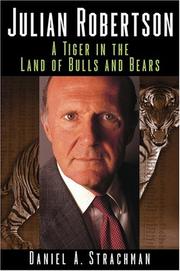
* Includes candid interviews of Robertson, his colleagues, and his peers
* Uncovers the trading strategies and investment style of a legendary fund manager
* Offers a rare glimpse inside the personal world of Julian Robertson
READERSHIP: Those with any interest in or knowledge of hedge funds, business readers, investment professionals.
Daniel A. Strachman is Managing Director of Answers Company, a New York-based money management firm that offers investment management services to individuals and institutions. He has contributed many articles on investment management and strategies to publications including the New York Post and the Financial Times and is also the author of Getting Started in Hedge Funds (Wiley 2000).
Also available by Daniel Strachman, Getting Started in Hedge Funds, 0471316962 Paper.
EAN - 9780471323631
Carton Quantity - 41
Hedge funds are now in the news more than a thousand times a day and yet it is hard to find clear, factual information about how they operate, raise capital, and invest. The Hedge Fund Book provides real-world case studies of various hedge fund managers providing a solid foundation in specialized hedge fund knowledge for both financial professionals and those aspiring to enter this field.
It provides an analysis of funds within different phases of their life cycles and investment processes, and examines each cycle in ways that would be informational for marketers as well as investors, bankers, and financial professionals who would like to learn more about day-to-day hedge fund operations
- Addresses everything you need to know about this popular segment of the financial industry within a case study format
- Each chapter contains several types of investment and situational analyses, insights and best practices along with a review and "test your knowledge section"
- Written by a successful hedge fund consultant and head of one of the largest hedge fund networking groups in the industry with more than 30,000 members
- This book is required reading for participants within the hedge fund industry's leading designation program, the CHP Designation
If you're looking to gain a better understanding of hedge funds, look no further than The Hedge Fund Book.
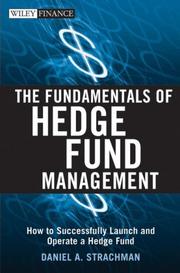
In The Fundamentals of Hedge Fund Management, both budding and established hedge fund managers will learn the fundamentals of building and maintaining a successful hedge fund business. Strachman presents the facts in an accessible and easy-to-use format that will empower readers to create a lasting fund that provides significant income for years to come. The Fundamentals of Hedge Fund Management provides information on everything from picking a lawyer to creating a fund's documents to determining what markets attract investors. Readers will glean valuable information from real-life experiences (both negative and positive) that have shaped and continue to guide many of today's leading and most respected funds.
Helpful, Accessible Guidance for Budding Hedge Funds
So You Want to Start a Hedge Fund provides critical lessons and thoughtful insights to those trying to decipher the industry, as well as those seeking to invest in the next generation of high performers. This book foregoes the sensational, headline-grabbing stories about the few billionaire hedge fund managers to reach the top of the field. Instead, it focuses on the much more common travails of start-ups and small investment firms. The successes and failures of a talented group of competitive managers—all highly educated and well trained—show what it takes for managers and allocators to succeed. These accounts include lessons on funding, team development, strategy, performance, and allocation.
The hedge fund industry is concentrated in the largest funds, and the big funds are getting bigger. In time, some of these funds will not survive their founders and large sums will get reallocated to a broader selection of different managers. This practical guide outlines the allocation process for fledgling funds, and demonstrates how allocators can avoid pitfalls in their investments. So You Want to Start a Hedge Fund also shows how to:
- Develop a sound strategy and raise the money you need
- Gain a real-world perspective about how allocators think and act
- Structure your team and investment process for success
- Recognize the patterns of successful start-ups
The industry is approaching a significant crossroads. Aggregate growth is slowing and competition is shifting away from industry-wide growth, at the expense of traditional asset classes, to market share capture within the industry. So You Want to Start a Hedge Fund provides guidance for the little funds—the potential future leaders of the industry.

THE INVESTMENT CLASSIC
"I've read Market Wizards at several stages of my career as it shows the staying power of good down-to-earth wisdoms of true practitioners with skin in the game. This is the central document showing the heuristics that real-life traders use to manage their affairs, how people who do rather than talk have done things. Twenty years from now, it will still be fresh. There is no other like it."
NASSIM N. TALEB, former derivatives trader, author of The Black Swan, and professor, NYU-Poly
"Market Wizards is one of the most fascinating books ever written about Wall Street. A few of the 'Wizards' are my friends and Jack Schwager has nailed their modus operandi on the head."
MARTIN W. ZWEIG, PhD, Editor, The Zweig Forecast
"It is difficult enough to develop a method that works. It then takes experience to believe what your method is telling you. But the toughest task of all is turning analysis into money. If you don't believe it, try it. These guys have it all: a method, the conviction, and the discipline to act decisively time after time, regardless of distractions and pressures. They are heroes of Wall Street, and Jack Schwager's book brings their characters vividly to life."
ROBERT R. PRECHTER, JR., Editor, The Elliott Wave Theorist
Merger Masters presents revealing profiles of monumentally successful merger investors based on exclusive interviews with some of the greatest minds to practice the art of arbitrage. Michael Price, John Paulson, Paul Singer, and others offer practical perspectives on how their backgrounds in the risk-conscious world of merger arbitrage helped them make their biggest deals. They share their insights on the discipline that underlies their fortunes, whether they practice the “plain vanilla” strategy of announced deals, the aggressive strategy of activist investment, or any strategy in between on the risk spectrum.
Merger Masters delves into the human side of risk arbitrage, exploring how top practitioners deal with the behavioral aspects of generating consistent profits from risk arbitrage. The book also includes perspectives from the other side of the mergers and acquisitions divide in the form of interviews with a trio of iconic CEOs: Bill Stiritz, Peter McCausland, and Paul Montrone. All three took advantage of M&A opportunities to help build long-term returns but often found themselves at odds with the short-term focus of Wall Street and merger investors. Told in lively, accessible prose, with bonus facts and figures for transaction junkies, Merger Masters is an incomparable set of stories with plenty of unfiltered lessons from the best managers of our time.

Seeking assets to manage? Frustrated by the pace and progress of your business development efforts?
Managers are often challenged by the process of asset gathering. Why doesn't the market recognize the firm's value? Where is the AUM? Here is a big idea-let us ask the very institutions we all want capital from, why most managers do not earn their assets and never will. Within these pages are the direct responses of institutional investors worldwide to these questions and more so that you can hear their feedback and utilize it to create a game plan that works.
Managers are a passionate lot. They work hard building firms, track records, and teams. Their strategies are different. Out in the market, they spend precious time and money in the pursuit of institutional assets to manage. Their numbers are better than competitors who are exponentially larger, well branded, and longer tenured. Aren't yours? Too often, this outperformance does not correlate to asset gathering with any efficiency nor direct route. The assets consistently go to the biggest players in the industry. The occasional entrant makes a big splash, while the industry remains a pyramid despite recent strides to level the playing field. Few firms make it to their desired capacity. So, what makes the difference in institutional investment management marketing and sales? This book is your key.
Now in its second edition, The Road to AUM provides investment managers, business owners, and marketing and sales professionals with a roadmap to institutional asset growth based on feedback directly from the institutions themselves. Whether a firm is adding products or channels, moving in a new direction, emerging, or just launching, an aerial view of the road ahead is paramount. This book will tell managers what the market will not. It will explain where to spend time and resources, and where to save them. Sandra Powers Murphy sheds light on the secret path to success, explaining the inside scoop and providing readers with a clear view of the forest through the trees for those seeking a path to growth.

"The Art of Short Selling is the best description of this difficulttechnique."--John Train, Train, Thomas, Smith Investment Counsel,and author of The New Money Masters
"Kathryn Staley has done a masterful job explaining the highlyspecialized art of short selling. Her approach to telling the truestories of famous investment 'scams' will keep the readerspellbound, while teaching the investor many cruciallessons."--David W. Tice, Portfolio Manager, Prudent BearFund
"Selling short is still a misunderstood discipline, but even themost raging bull needs to know this valuable technique to masterthe ever-changing markets."--Jim Rogers, author, InvestmentBiker
On the investment playing field, there is perhaps no game moreexciting than short selling. With the right moves, it can yieldhigh returns; one misstep, however, can have disastrousconsequences. Despite the risk, a growing number of players areanteing up, sparked in part by success stories such as that ofGeorge Soros and the billions he netted by short selling theBritish pound. In The Art of Short Selling, Kathryn Staley, anexpert in the field, examines the essentials of this importantinvestment vehicle, providing a comprehensive game plan with whichyou can effectively play--and win--the short selling game.
Whether used as a means of hedging bets, decreasing the volatilityof total returns, or improving returns, short selling must behandled with care--and with the right know-how. As Staley pointsout, "Short selling is not for the faint of heart. If a stock movesagainst the position holder, the effect on a portfolio and networth can be devastating. Investors need to understand the impacton their accounts as well as the consequences of getting bought inbefore they indulge in short selling." The Art of Short Sellingguides you--clearly and concisely--through the ins and outs of thishigh-risk, high-stakes game.
The first--and most important--move in selling short is to identifyflaws in a business before its share prices drop. To help youtackle this key step, Staley shows you how to evaluate companyfinancial statements and balance sheets, make sense of returnratios, detect inconsistencies in inventory, and analyze thestatement of cash flows. Through real-world examples thatillustrate the shorting of bubble, high multiple growth, and themestocks, you'll proceed step by step through the complete processand learn to carry out all the essentials for a successful shortsell, including quantifying the risk factor and orchestratingcorrect timing, as well as implementing advanced valuationtechniques to execute the sell/buy.
Packed with landmark, cutting-edge examples, up-to-the-minuteguidelines, and pertinent regulations, The Art of Short Selling isa timely and comprehensive reference that arms you with thenecessary tools to make a prepared and confident entrance onto theshort selling playing field.

Soros
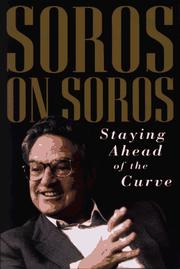
"The outcome [of this book] is a summing up of my life's work. . . As I finish the book, I feel I have succeeded."-George Soros from the Preface
Critical praise for Soros on Soros
"If you have ever wanted to sit down for a candid conversation with a phenomenal financial success, George Soros's book provides the opportunity. You will meet a complex man and a first-rate mind."-Henry A. Kissinger
"The best expert on Soros is undoubtedly George Soros! After all, who is better equipped to tell us what he really thinks and how he thinks, a matter of some importance given the fact that he has translated a remarkable personal financial success into a truly generous and historically significant effort to promote postcommunist democracy." -Zbigniew Brzezinski
"The best X-ray of the mind of the master yet." -Barton M. Biggs
"George Soros brings a lot more to the world of finance than the intuition and nerve of a born trader-and in Soros on Soros he's no longer bashful about telling us about it. A philosopher at heart, George attributes his success at investing to a theory of the interaction of reality and human perception. What really drives the man now, with a personal fortune beyond all personal need, is a different kind of strategic investing-investment to build in Eastern Europe the kind of open societies he came to value in his own life." -Paul A. Volcker
Financial guru George Soros is one of the most colorful and intriguing figures in the financial world today. Now in Soros on Soros, readers are given their most intimate and revealing look yet into the life and mind of the one BusinessWeek dubbed, "The Man Who Moves Markets."
Soros on Soros interweaves financial theory and personal reminiscence, political analysis and moral reflection to offer a compelling portrait of the world (and its markets) according to Soros. In an interview-style narrative with Byron Wien, Managing Director at Morgan Stanley, and with German journalist Krisztina Koenen, Soros vividly describes the genesis of his brilliant financial career and shares his views on investing and global finance, politics and the emerging world order, and the responsibility of power.
Speaking with remarkable candor, he traces his progress from Holocaust survivor to philosophy student, unsuccessful tobacco salesman to the world's most powerful and profitable trader and introduces us to the people and events that helped shape his character and his often controversial views.
In describing the investment theories and financial strategies that have made him "a superstar among money managers" (The New York Times), Soros tells the fascinating story of the phenomenally successful Soros Fund Management and its $12 billion flagship, Quantum Fund. He also offers fresh insights into some of his most sensational wins and losses, including a firsthand account of the $1 billion he made going up against the British pound and the fortune he lost speculating on the yen. Plus: Soros's take on the devaluation of the peso and currency fluctuations internationally.
He tells of the personal and professional crises that more than once threatened to destroy him and of the personal resources he drew upon to turn defeat into resounding victory. And he explains his motivations for establishing the Soros Foundation and the Open Society Institute through which he worked to build open societies in postcommunist countries in Eastern Europe and the former Soviet Union.
Finally, turning his attention to international politics, Soros offers keen insights into the current state of affairs in Russia and the former communist bloc countries and analyzes the reasons behind and likely consequences of the West's failure to properly integrate them into the free world. He also explores the crisis of the ERM and analyzes the pros and cons of investing in a number of emerging markets.
Find out what makes one of the greatest financial wizards of this or any age tick. Soros on Soros is a must read for anyone interested in world finance and international policy.
Trading


There are hundreds of exhibits in the investment "factor zoo." Which ones are actually worth your time, and your money?
Andrew L. Berkin and Larry E. Swedroe, co-authors of The Incredible Shrinking Alpha, bring you a thorough yet still jargon-free and accessible guide to applying one of today's most valuable quantitative, evidence-based approaches to outperforming the market: factor investing. Designed for savvy investors and professional advisors alike, Your Complete Guide to Factor-Based Investing: The Way Smart Money Invests Today takes you on a journey through the land of academic research and an extensive review of its 50-year quest to uncover the secret of successful investing.
Along the way, Berkin and Swedroe cite and distill more than 100 academic papers on finance and introduce five unique criteria that a factor (at its most basic, a characteristic or set of characteristics common among a broad set of securities) must meet to be considered worthy of your investment. In addition to providing explanatory power to portfolio returns and delivering a premium, Swedroe and Berkin argue a factor should be persistent, pervasive, robust, investable and intuitive.
By the end, you'll have learned that, within the entire "factor zoo," only certain exhibits are worth visiting and only a handful of factors are required to invest in the same manner that made Warren Buffett a legend.
Your Complete Guide to Factor-Based Investing: The Way Smart Money Invests Today offers an in-depth look at the evidence practitioners use to build portfolios and how you as an investor can benefit from that knowledge, rendering it an essential resource for making the informed and prudent investment decisions necessary to help secure your financial future.
An honest depiction of the challenges of trading and a clear explanation of what it takes to succeed
Trading tends to be a winner-take-all activity where a small number of traders are very successful, while the majority either lose money or generate relatively small profits. In The Mental Strategies of Top Traders, author Ari Kiev identifies and analyzes the characteristics of successful traders and shows you how to cultivate these same characteristics.
Successful trading, Kiev asserts, requires an unusual and sometimes contradictory blend of intellectual and psychological abilities, including the willingness to take risks, but in a very controlled manner; the discipline to develop high-conviction trading ideas in the face of unpredictable markets and incomplete information; as well as a strong drive to win, but also accept failure. Here, you'll discover how to achieve all this, and much more.
- Provides advice and solutions for traders struggling with today's volatile and stressful markets
- Authoritatively identifies key mental strategies of top traders
- Written by Ari Kiev, a highly respected figure in the professional trading community
- Analysis is supported by comments from contemporary traders and portfolio managers, many of whom struggled with the markets of 2008
Designed with the serious trader in mind, this book will put you in a better position to excel in today's tumultuous markets.
The mechanics of short selling are relatively simple, yet virtually no one, including most professionals, knows how to sell short correctly. In How to Make Money Selling Stocks Short, William J. O'Neil offers you the information needed to pursue an effective short selling strategy, and shows you--with detailed, annotated charts--how to make the moves that will ultimately take you in the right direction.
From learning how to set price limits to timing your short sales, the simple and timeless advice found within these pages will keep you focused on the task at hand and let you trade with the utmost confidence.
Why the irrational exuberance of investors hasn't disappeared since the financial crisis
In this revised, updated, and expanded edition of his New York Times bestseller, Nobel Prize–winning economist Robert Shiller, who warned of both the tech and housing bubbles, cautions that signs of irrational exuberance among investors have only increased since the 2008–9 financial crisis. With high stock and bond prices and the rising cost of housing, the post-subprime boom may well turn out to be another illustration of Shiller's influential argument that psychologically driven volatility is an inherent characteristic of all asset markets. In other words, Irrational Exuberance is as relevant as ever. Previous editions covered the stock and housing markets—and famously predicted their crashes. This edition expands its coverage to include the bond market, so that the book now addresses all of the major investment markets. It also includes updated data throughout, as well as Shiller's 2013 Nobel Prize lecture, which places the book in broader context. In addition to diagnosing the causes of asset bubbles, Irrational Exuberance recommends urgent policy changes to lessen their likelihood and severity—and suggests ways that individuals can decrease their risk before the next bubble bursts. No one whose future depends on a retirement account, a house, or other investments can afford not to read this book.
A Business Week, New York Times Business, and USA Today Bestseller
"Ambitious and readable . . . an engaging introduction to the oddsmakers, whom Bernstein regards as true humanists helping to release mankind from the choke holds of superstition and fatalism."
—The New York Times
"An extraordinarily entertaining and informative book."
—The Wall Street Journal
"A lively panoramic book . . . Against the Gods sets up an ambitious premise and then delivers on it."
—Business Week
"Deserves to be, and surely will be, widely read."
—The Economist
"[A] challenging book, one that may change forever the way people think about the world."
—Worth
"No one else could have written a book of such central importance with so much charm and excitement."
—Robert Heilbroner author, The Worldly Philosophers
"With his wonderful knowledge of the history and current manifestations of risk, Peter Bernstein brings us Against the Gods. Nothing like it will come out of the financial world this year or ever. I speak carefully: no one should miss it."
—John Kenneth Galbraith Professor of Economics Emeritus, Harvard University
In this unique exploration of the role of risk in our society, Peter Bernstein argues that the notion of bringing risk under control is one of the central ideas that distinguishes modern times from the distant past. Against the Gods chronicles the remarkable intellectual adventure that liberated humanity from oracles and soothsayers by means of the powerful tools of risk management that are available to us today.
"An extremely readable history of risk."
—Barron's
"Fascinating . . . this challenging volume will help you understand the uncertainties that every investor must face."
—Money
"A singular achievement."
—Times Literary Supplement
"There's a growing market for savants who can render the recondite intelligibly-witness Stephen Jay Gould (natural history), Oliver Sacks (disease), Richard Dawkins (heredity), James Gleick (physics), Paul Krugman (economics)-and Bernstein would mingle well in their company."
—The Australian
Many investors were lured into the feeding frenzy of Tech stocks, Internet stocks, and dot-coms, but those who followed the proven methods of Edwards and Magee were prepared for a market adjustment. When nothing else seems to work, technical analysis does. Based on extensive research and experience, Technical Analysis of Stock Trends gives you proven trading and investing techniques for success, even in today's seemingly uncertain and unpredictable market.
Get the new edition of the trader's bible. Completely revised and updated, the Eighth Edition is the newest testament to the bible of stock market timing. Edward's practical clarification of the Dow Theory, explanations of reversal and consolidation patterns, trendlines, and support or resistance are still the most useful tools you can have. Magee's proven methods remain the most effective measures ever developed for determining reliable buy or sell signals. Easy to follow examples explain how to construct and use charts to monitor trends and project with confidence when prices will fall; how far they will drop; when to buy; and how to calculate and set up "stops" that protect your investment.
PLAY THE STOCK MARKET THE RIGHT WAY - USE THE APPROACH THAT HAS STOOD THE TEST OF TIME
As a trader, portfolio manager, or long-term investor, you need information that will give you the edge. There are plenty of so-called short cuts out there, but nothing beats rolling up your sleeves, getting your hands dirty, and learning how technical analysis works. This book gives you more than a formula for trading and investing, it gives you a formula for long term success. Old market, new market - technical analysis is the only way to go. Technical Analysis of Stock Trends, Eighth Edition shows you how to do it right.
SEE WHAT'S NEW IN THE EIGHTH EDITION:
Coverage of options
Futures
Options on futures
ishares
Long-term investing
Hedging and tax avoidance
Portfolio risk management and analysis
Controlling trade risk
Rhythmic investing
Current technology and software
Managing speculative frenzies (tulipomanias and Internet crazes)
Critical new investment instruments such as DIAMONDS and SPDYRS
Current finance theory and practice
Pragmatic portfolio theory and practice
Current record of Dow Theory
Extensive bibliography
Appendix of resources such as: Internet sites, professional risk and profit analysis, gambler's ruin analysis, volatility formula, sharpe ratio, software packages
...and much more!
Other


The laws of financial boom and bust, it turns out, have a lot to do with male hormones. In a series of startling experiments, Canadian scientist Dr. John Coates identified a feedback loop between testosterone and success that dramatically lowers the fear of risk in men, especially young men; he has vividly dubbed the moment when traders transform into exuberant high flyers "the hour between dog and wolf." Similarly, intense failure leads to a rise in levels of cortisol, which dramatically lowers the appetite for risk. His book expands on his seminal research to offer lessons from the exploding new field studying the biology of risk.
Coates's conclusions shed light on all types of high-pressure decision-making, from the sports field to the battlefield, and leaves us with a powerful recognition: to handle risk isn't a matter of mind over body, it's a matter of mind and body working together. We all have it in us to be transformed from dog to wolf; the only question is whether we can understand the causes and the consequences.
