Philosophy
Heschel
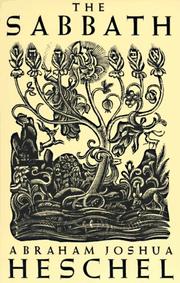
Elegant, passionate, and filled with the love of God's creation, Abraham Joshua Heschel's The Sabbath has been hailed as a classic of Jewish spirituality ever since its original publication--and has been read by thousands of people seeking meaning in modern life.
In this brief yet profound meditation on the meaning of the Seventh Day, Heschel, one of the most widely respected religious leaders of the twentieth century, introduced the influential idea of an 'architecture of holiness" that appears not in space but in time. Judaism, he argues, is a religion of time: it finds meaning not in space and the materials things that fill it but in time and the eternity that imbues it, so that 'the Sabbaths are our great catherdrals.'
Featuring black-and-white illustrations by Ilya Schor
Abraham Joshua Heschel was one of the most revered religious leaders of the 20th century, and God in Search of Man and its companion volume, Man Is Not Alone, two of his most important books, are classics of modern Jewish theology. God in Search of Man combines scholarship with lucidity, reverence, and compassion as Dr. Heschel discusses not man's search for God but God's for man--the notion of a Chosen People, an idea which, he writes, "signifies not a quality inherent in the people but a relationship between the people and God." It is an extraordinary description of the nature of Biblical thought, and how that thought becomes faith.
Man Is Not Alone is a profound, beautifully written examination of the ingredients of piety: how man senses God's presence, explores it, accepts it, and builds life upon it. Abraham Joshua Heschel's philosophy of religion is not a philosophy of doctrine or the interpretation of a dogma. He erects his carefully built structure of thought upon foundations which are universally valid but almost generally ignored. It was Man Is Not Alone which led Reinhold Niebuhr accurately to predict that Heschel would "become a commanding and authoritative voice not only in the Jewish community but in the religious life of America." With its companion volume, God in Search of Man, it is revered as a classic of modern theology.
The Insecurity of Freedom is a collection of essays on Human Existence by one of the foremost Jewish thinkers of our time, Abraham Joshua Heschel.
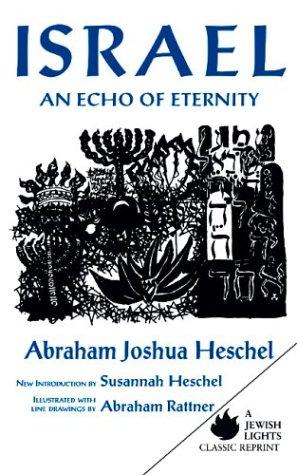
Israel: An Echo of Eternity is Dr. Heschel's book about the past, present, and future home of the Jews. According to Dr. Heschel the presence of Israel has tremendous historical and religious significance for the whole world: "History is not always made by men alone...Israel is a personal challenge, a personal religious issue. We are God's stake in human history. We are the dawn and the dusk, the challenge and the test. The presence of Israel is the repudiation of despair. Israel calls for a renewal of trust in the Lord of history." Abraham Joshua Heschel, one of the foremost religious figures of our time, died in 1972. Israel: An Echo of Eternity is his powerful and eloquent book on the meaning of Israel today.
Long before Norman Podhoretz became one of the intellectual leaders of American neoconservatism, he was a student of Hebrew literature and a passionate reader of the prophets of the Old Testament. Returning to them after fifty years, he has produced something remarkable: an entirely new perspective on some of the world's best-known works.
Or, rather, three new perspectives. The first is a fascinating account of the golden age of biblical prophecy, from the eighth to the fifth century B.C.E., and its roots in earlier ages of the ancient Israelite saga. Thus, like large parts of the Bible itself, The Prophets is a history of the Near East from the point of view of a single nation, covering not only what is known about the prophets themselves -- including Elijah, Amos, Isaiah, Jeremiah, and Ezekiel -- but also the stories of King David, King Saul, and how the ancient Israelites were affected by the great Near Eastern empires that surrounded them. Layered into this work of history is a piece of extraordinary literary criticism. Podhoretz's very close reading of the verse and imagery used by the biblical prophets restores them to the top reaches of the poetic pantheon, for these books contain, unequivocally, some of the greatest poetry ever written.
The historical chronicle and the literary criticism will transport readers to a time that is both exotic and familiar and, like any fine work of history or literature, will evoke a distinct and original world. But the third perspective of The Prophets is that of moral philosophy, and it serves to bring the prophets' message into the twenty-first century. For to Norman Podhoretz, the real relevance of the prophets today is more than the excitement of their history or the beauty of their poetry: it is their message. Podhoretz sees, in the words of the biblical prophets, a war being waged, a war against the sin of revering anything made by the hands of man -- in short, idolatry. In their relentless battle against idolatry, Podhoretz finds the prophets' most meaningful and enduring message: a stern warning against the all-consuming worship of self that is at least as relevant in the twenty-first century as it was three thousand years ago.
The Prophets will earn the respect of biblical scholars and the fascinated attention of general readers; its observations will be equally valued by believers and nonbelievers, by anyone with spiritual yearnings. Learned, provocative, and beautifully written, The Prophets is a deeply felt, deeply satisfying work that is at once history, literary criticism, and moral philosophy -- a tour de force.
Buddhism
Translated with Notes by Arthur Waley. With an Introduction by Robert Wilkinson.
Dating from around 300BC, Tao Te Ching is the first great classic of the Chinese school of philosophy called Taoism. Within its pages is summed up a complete view of the cosmos and how human beings should respond to it. A profound mystical insight into the nature of things forms the basis for a humane morality and vision of political utopia.
The ideas in this work constitute one of the main shaping forces behind Chinese spirituality, art and science, so much so that no understanding of Chinese civilisation is possible without a grasp of Taoism. This edition presents the authoritative translation by Arthur Waley, with a new Introduction reflecting recent developments in the interpretation of the work.

From Sam Harris, neuroscientist and author of numerous New York Times bestselling books, Waking Up is for the twenty percent of Americans who follow no religion but who suspect that important truths can be found in the experiences of such figures as Jesus, the Buddha, Lao Tzu, Rumi, and the other saints and sages of history. Throughout this book, Harris argues that there is more to understanding reality than science and secular culture generally allow, and that how we pay attention to the present moment largely determines the quality of our lives.
Waking Up is part memoir and part exploration of the scientific underpinnings of spirituality. No other book marries contemplative wisdom and modern science in this way, and no author other than Sam Harris—a scientist, philosopher, and famous skeptic—could write it.
Op maandagmiddag moeten vijf studenten nablijven. Ze hebben tot dat moment niks met elkaar gemeen, maar een moord brengt hen samen. Tegelijkertijd ontvouwt zich om hen heen een dodelijk kat-en-muisspel waarin duistere geheimen uitkomen. Is er nog iemand te vertrouwen?
Allemaal hebben ze een motief.
Allemaal hebben ze iets te verbergen.
En een van hen liegt.
Dit spannende Young Adult-boek voor jongeren vanaf 15 jaar is als serie te zien op Netflix.
Lees verder in deze serie:
One of us is next (deel 2)
One of us is back (deel 3)
Lees ook van Karen M. McManus:
Twee kunnen een geheim bewaren
Familie liegt nooit
Jij wordt nog eens mijn dood
Niets meer te zeggen
Do you need more time for yourself?
Do you want to get your mind off things?
Do you long for more happiness and contentment?
Then this is the book for you!
It contains 52 stories that will change your life and your way of thinking.
Each story is carefully selected to explain important Buddhist wisdom and thought processes. They deal with universal themes such as gratitude, mindfulness, self-love, and happiness.
The stories convey valuable life lessons that will enrich your life. After each story, a reference to the present time is made. It also tells what you can learn from the story for your own life.
Especially in today's world full of stress and distractions, the teachings of Buddhism are a true blessing. They give us new food for thought and show us what really matters in life.
This book invites you to reflect and find yourself. It shows you new ways of thinking that have incredible potential. You do NOT need to have any prior knowledge of Buddhism. These are timeless life lessons that are valuable and helpful to everyone (regardless of age or religion).
Buy this book if you....
want to stop negative thoughts
want to become happier and more content
need new ideas and food for thought
want to reduce stress
want to find inner peace
Order the book now and start the most important journey in life: The journey to yourself.
Zen Training is a comprehensive handbook for zazen, seated meditation practice, and an authoritative presentation of the Zen path. The book marked a turning point in Zen literature in its critical reevaluation of the enlightenment experience, which the author believes has often been emphasized at the expense of other important aspects of Zen training. In addition, Zen Training goes beyond the first flashes of enlightenment to explore how one lives as well as trains in Zen. The author also draws many significant parallels between Zen and Western philosophy and psychology, comparing traditional Zen concepts with the theories of being and cognition of such thinkers as Heidegger and Husserl.
Classics


A new selection from the national epic of India
Originally composed in Sanskrit sometime between 400 BC and 400 AD, The Mahabharata-with one hundred thousand stanzas of verse-is one of the longest poems in existence. At the heart of the saga is a conflict between two branches of a royal family whose feud culminates in a titanic eighteen-day battle. Exploring such timeless subjects as dharma (duty), artha (purpose), and kama (pleasure) in a mythic world of warfare, magic, and beauty, this is a magnificent and legendary Hindu text of immense importance to the culture of the Indian subcontinent.
For more than seventy years, Penguin has been the leading publisher of classic literature in the English-speaking world. With more than 1,700 titles, Penguin Classics represents a global bookshelf of the best works throughout history and across genres and disciplines. Readers trust the series to provide authoritative texts enhanced by introductions and notes by distinguished scholars and contemporary authors, as well as up-to-date translations by award-winning translators.


These have been called the most famous and beloved letters of the 20th century. Rainer Maria Rilke himself said that much of his creative expression went into his correspondence, and here he touches upon subjects that will interest writers, artists, and thinkers. Letters to a Young Poet is a classic that should be read by everyone who dreams of expressing themselves creatively. This luminous translation offers inspiration to all people who seek to know and express their inner truth.
This edition features a new foreword by Kent Nerburn, author of Small Graces and Letters to My Son.

Contains The Discourses/Fragments/Enchiridion
'I must die. But must I die bawling?'
Epictetus, a Greek Stoic and freed slave, ran a thriving philosophy school in Nicopolis in the early second century AD. His animated discussions were celebrated for their rhetorical wizardry and were written down by Arrian, his most famous pupil. The Discourses argue that happiness lies in learning to perceive exactly what is in our power to change and what is not, and in embracing our fate to live in harmony with god and nature. In this personal, practical guide to the ethics of Stoicism and moral self-improvement, Epictetus tackles questions of freedom and imprisonment, illness and fear, family, friendship and love.
Translated and Edited with an Introduction by Robert Dobbin
Judaism

The Gate of Trust Shaar HaBitachon The Fourth Chapter From Chovot HaLevavot Duties of the Heart By Rabbeinu Bachya ibn Paquda
The Gate of Trust Has been recognized by all Jews as a supreme spiritual and ethical guide, it has been studied and analyzed across the world for almost a thousand years. Over that period, the Jewish nation has been blessed with numerous elucidations to this text from many great and holy Scholars. This book should be used as a reference, once you have understood it with a proper explanation from other great commentators.


Novels
It presents a richly detailed portrait of life in Berlin under the Nazis and tells the sweeping saga of one working-class couple who decides to take a stand when their only son is killed at the front. With nothing but their grief and each other against the awesome power of the Reich, they launch a simple, clandestine resistance campaign that soon has an enraged Gestapo on their trail, and a world of terrified neighbors and cynical snitches ready to turn them in.
In the end, it’s more than an edge-of-your-seat thriller, more than a moving romance, even more than literature of the highest order—it’s a deeply stirring story of two people standing up for what’s right, and for each other.
Other
The Origins and History of Consciousness draws on a full range of world mythology to show how individual consciousness undergoes the same archetypal stages of development as human consciousness as a whole. Erich Neumann was one of C. G. Jung's most creative students and a renowned practitioner of analytical psychology in his own right. In this influential book, Neumann shows how the stages begin and end with the symbol of the Uroboros, the tail-eating serpent. The intermediate stages are projected in the universal myths of the World Creation, Great Mother, Separation of the World Parents, Birth of the Hero, Slaying of the Dragon, Rescue of the Captive, and Transformation and Deification of the Hero. Throughout the sequence, the Hero is the evolving ego consciousness.
Featuring a foreword by Jung, this Princeton Classics edition introduces a new generation of readers to this eloquent and enduring work.
If humanity cannot live with the dangers and responsibilities inherent in freedom, it will probably turn to authoritarianism. This is the central idea of Escape from Freedom, a landmark work by one of the most distinguished thinkers of our time, and a book that is as timely now as when first published in 1941. Few books have thrown such light upon the forces that shape modern society or penetrated so deeply into the causes of authoritarian systems. If the rise of democracy set some people free, at the same time it gave birth to a society in which the individual feels alienated and dehumanized. Using the insights of psychoanalysis as probing agents, Fromm's work analyzes the illness of contemporary civilization as witnessed by its willingness to submit to totalitarian rule.
Eleven months after he was liberated from the Nazi concentration camps, Viktor E. Frankl held a series of public lectures in Vienna. The psychiatrist, who would soon become world famous, explained his central thoughts on meaning, resilience, and the importance of embracing life even in the face of great adversity.
Published here for the very first time in English, Frankl’s words resonate as strongly today—as the world faces a coronavirus pandemic, social isolation, and great economic uncertainty—as they did in 1946. He offers an insightful exploration of the maxim “Live as if you were living for the second time,” and he unfolds his basic conviction that every crisis contains opportunity. Despite the unspeakable horrors of the camps, Frankl learned from the strength of his fellow inmates that it is always possible to “say yes to life”—a profound and timeless lesson for us all.
"This was true mystical vision. This I could never have anticipated. But I knew that we were both on the same galactic journey into the great void that contains us all. I was standing before a boundlessness that could swallow the stars in a heartbeat."--from Breakfast at the Victory